

Story First Growth
From Job Searching to Building a Business: Lessons From My First Year

Are you struggling to find new clients?
Are you ready to put your foot on the gas?
What’s your growth strategy?
Recently, a majority of the LinkedIn messages landing in my inbox have included some version of these questions.
Some messages are clearly automated. Others might be real people. It’s hard to tell. What they share is a promise: to help me rapidly grow my small business through more leads, AI-powered systems, and proven outreach strategies.
They’re not unreasonable questions. But as I approach the one-year mark of running my business, Story First Design, they’ve prompted me to pause and reflect on what growth has actually looked like for me and what I want it to look like next.
Looking back, a few key beliefs and practices shaped my first year more than any formal growth plan ever could.
Help Us Help You! Take 5 minutes to fill out Our State of the Community Survey!
After the fall
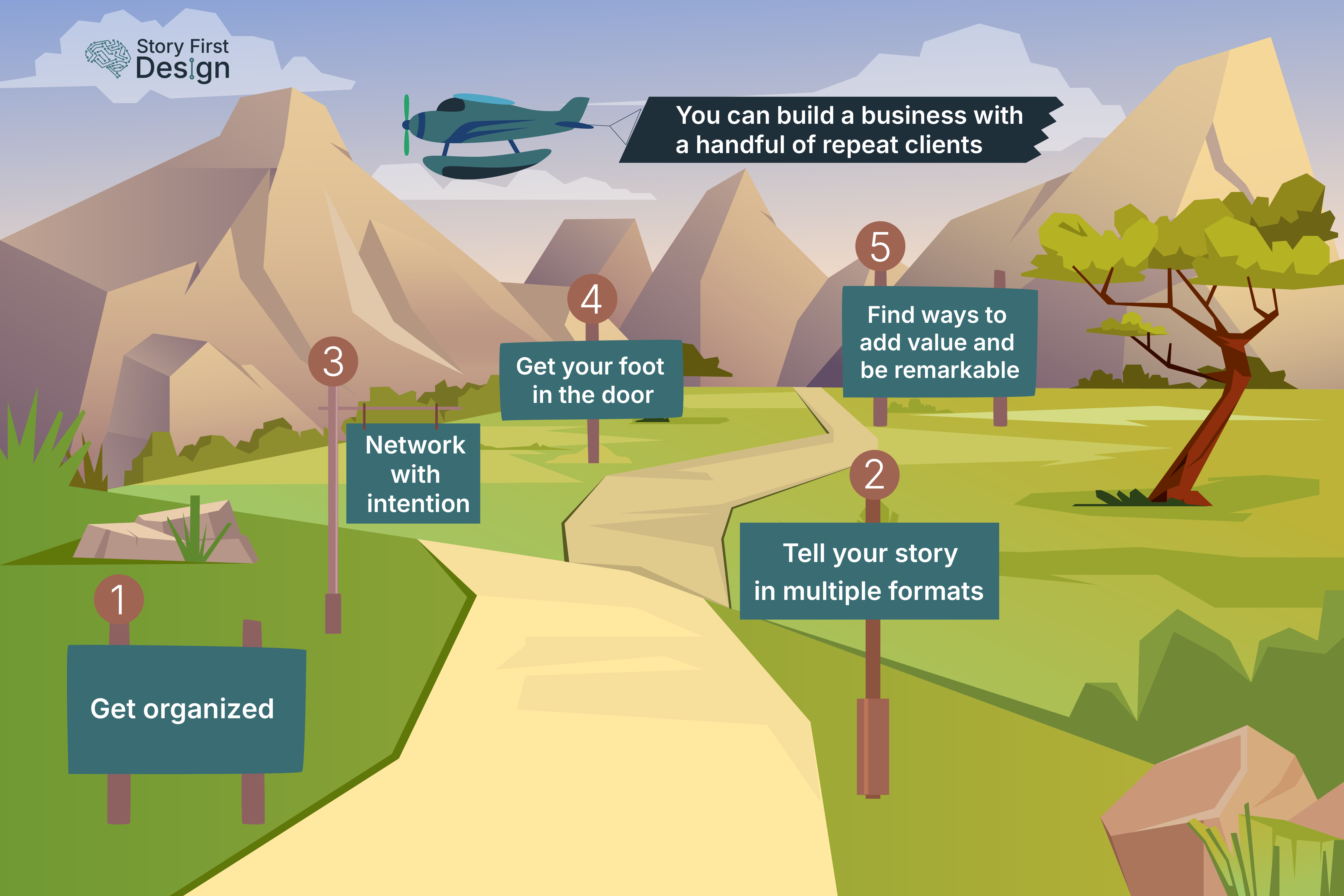
When I finally had the strength to return to my computer after my professional world fell apart, the first thing I did was update my portfolio. I knew how important networking—and knowing someone inside a company—was to landing an interview. What came next for me was finding the right people to talk to and sharing my story in a way that could open new doors. My website became a central part of how I did that.
Over the years, I’ve learned that I can’t show up as the best version of myself in a chaotic situation unless I create a system that gives me structure to lean on. So the next thing I did was to get organized.
I created a Google Sheet to track everyone I could think of reaching out to: former colleagues, consultants I have worked with, and friends who could help me identify and connect with people in new sectors.
I began scheduling calls with the intention of finding job leads. Instead, something unexpected happened.
Create value beyond the ask
One of the first people I spoke with was a talented small business owner I had hired as a consultant many times over the years. She asked if I would be open to consulting for her now. Why not? I thought. This could be a way to stay connected to the work I loved while I figured out what came next.
My few first tasks were to update PowerPoint decks, not something I’d focused on in recent years, but it was paid work. More importantly, it offered a much-needed sense of self-value and confidence. I did it as well as I could and also offered design suggestions that showed the value I could add beyond the immediate request.
That work turned into recurring projects throughout the year. PowerPoint creation led to session design, which led to session facilitation.
She was open to expanding my scope because we already had already built a foundation of trust. She knew the strengths I brought as a designer and facilitator, and by showing up consistently, being responsive, and using those strengths to support her work, I became a go-to partner she could rely on.
Although that work brought in some side income and confidence, I was still very much in job-search mode. Around that time, I asked my neighbor if he knew anyone in the learning and development world, and he connected me with his colleague who worked on the L&D team. We had a great conversation, but it didn’t seem like it would lead anywhere.
A few weeks later, she mentioned my name to a small business owner in Spain. That business owner looked at my website and reached out to discuss a potential opportunity. We had never met, so we were building trust from the ground up, one conversation at a time.
After a few meetings, she brought me in to design and facilitate a series of virtual leadership and management sessions for her client, the first of many projects we worked on throughout the year.
Once the work began, I brought systems, tools, and templates which demonstrated that I wasn’t just creating effective learning experiences, but also improving how the work got done. I focused on creating systems she could adapt and replicate in the future, adding more value than the original request.
I believe she took a chance on me largely because I could clearly tell my story—first through my website, which opened the door, and then through conversation, which led to the work.
I shared examples of times I had designed and facilitated similar sessions, along with my own experience leading teams and supervising colleagues. I listened closely to her hopes and concerns and offered insights drawn directly from my experience to address the gaps she was navigating.
After turning one-off requests from these two clients into recurring work, I realized having my own small business was possible. I formed my LLC, launched my business website, and reframed my networking efforts from finding job leads to building a client base for Story First Design. I haven’t applied for a job since.
Make the work—and the experience—remarkable
There are thousands of consultants someone could work with—and realistically, five to ten already sitting in their contacts. Why should they choose you?
Over the last decade as a team leader, much of my work has been about creating the conditions for others to do their best work—setting a clear direction, inspiring and advocating for people, celebrating progress, and knowing when to get out of the way. Consulting—especially on cross-functional teams without guaranteed budgets—demands an intrapreneurial mindset.
As Seth Godin explains: Opportunities aren’t given; they’re created through remarkable work—work so exceptional, distinctive, and valuable that others feel compelled to talk about it and share it. But it’s not just about the quality of your work, it’s about the experience of working with you.
Being remarkable to work with can look like anticipating needs before they’re voiced.
For example, when one of my new clients asked me to create a macro design for a leadership session, I also drafted the email she could use to share that document with her client. That only took me a few minutes, but the next time she needs support with design, that small moment of ease might be the thing that brings me to mind.
It’s also about being a calm, reassuring presence.
Timelines can feel daunting to someone juggling multiple priorities at once. The way you respond when they ask, “Can we get this done in time?”—the steadiness, clarity, and confidence you bring to that moment—can matter more than we often realize. High-quality work is the baseline, but how you make people feel while doing the work can be what builds trust, reduces stress, and brings them back.
When people think about you—or talk about working with you with others—they’re telling a story. What story do you want them to share?
Create stability before scale
Those first two clients gave me confidence. The next phase gave me stability.
My next two clients were large organizations—one of the world’s largest medical associations and an education nonprofit focused on developing school leaders. In both cases, the work came through former colleagues: one who had joined the organization, and another who had secured a consulting role and suggested me as additional support for the development team.
The medical association hired me to design their new LMS and migrate content from an existing system. This became ongoing, predictable work that created a foundation I could build on. As I got deeper into the project, I began to see additional opportunities to support their digital learning ecosystem, which led to new agreements around creative coaching, podcast creation, and video and eLearning development.
The nonprofit hired me to develop six eLearning courses over the year. That structure created a steady rhythm of work, allowing me to find efficiencies, better anticipate their needs and preferences, and continue strengthening the foundation of my business.
Together, these long-term, recurring engagements moved me from realizing a small business was possible, to building one that could support me financially and fulfill me professionally. They created predictability, focus, and the freedom to stop chasing the next thing—allowing me to build trust while looking to the horizon with intention. That’s where I find myself now.
Deepen while expanding
So am I ready to put my foot on the gas of growth?
Not in the way those LinkedIn messages promise. My current pace is working well for me, and I’m choosing to be intentional about what comes next—even if that means slowing down in order to see the road more clearly.
Rather than speeding up, I plan to pull over at a rest stop with my current clients—take stock of where we are, deepen our relationships, and find new ways to add value and work together.
At the same time, I’m studying the map—identifying new partners and exploring possibilities for where I can head next. I’m excited to scale beyond what I can do alone and return to leading creative design teams, but I want that growth to happen step by step, not recklessly accelerated by blanket sales pitches or generic promises of transformation.
I want my growth to be grounded in the philosophy at the heart of my business: that stories are how we make meaning and inspire change. My growth strategy will continue to put story first by prioritizing listening closely to others to understand their needs and hopes for the road ahead, generously sharing my own story, and co-creating what comes next together.
If your future includes creating remarkable learning experiences or products—and you’re interested in exploring that road with me—connect with me on LinkedIn. I’d love to hear your story.
At Story First Design, we use storytelling and technology to bring learning to life—creating experiences and products that connect emotionally, clarify complex ideas, and turn insight and inspiration into action.
Help Us Help You
To meet our mission of empowering you through this transition we’ve put together a team of former USAID colleagues who—just like you—had the rug pulled out from under them. We pay them a stipend ($25/hr) to develop resources, source content, run events, and whatever else it takes support our community. Without their efforts, Career Pivot would falter.
To continue supporting you through your transition, we need additional funding to cover the hours our team puts in. If you’ve benefited from our work and have the resources to help, here are two ways you can support us:
Sign up for a discounted annual subscription right now
Fund us through the BuyMeACoffee Platform
 | A guest post by
|