

Staying Useful: From Humanitarian Programs to Home Projects
The work is different. The logic is the same.

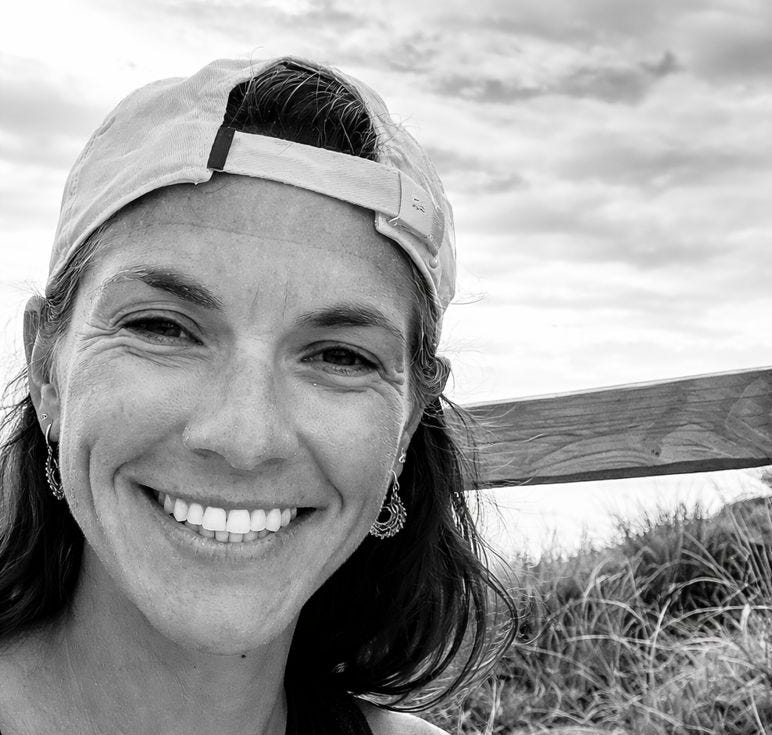
My name is Sasha McConnell, and I started Sorted by McConnell, a project management and home organizing company, a few weeks after the USAID project I worked on was terminated.
Help Us Help Others
If you’ve benefited from our work and have the resources to help, please consider making a small donation to our team.
Starting Out
In 2005, I graduated with a Bachelor of Arts degree in Art History and - perhaps unsurprisingly - absolutely no sense of what I wanted to do with the rest of my life. I worked for an art consultant by day and bartended and waitressed by night, feeling directionless with a latent sense of anticipation. When Hurricane Katrina raced through the Gulf Coast a few months later, I knew—without hesitation—that I had to go. That sense of temporary clarity for an instinctual heart-driven step would happen again nearly twenty years later, in March of 2025.
I was driving trucks and leading teams of extraordinary volunteers across New Orleans for six weeks. The work was chaotic, exhausting, and entirely focused on helping people. It felt natural, and I loved the human engagement and manual components of the work. And yet, when I returned home, I found myself stuck again.
Despite that formative experience, I still didn’t understand that there was a field—an actual profession—built around exactly this kind of work. Growing up, humanitarianism, as a career, was not something I had been familiar with. I learned about service early in life. It was modeled consistently and generously, especially by my father, who was deeply committed to supporting those around him in whatever ways he could. But while I understood service as a value, I had no concept of humanitarian response as an occupation.
Over the next nineteen years, I built my career in and around the humanitarian sector, working on domestic and international humanitarian and development programs in management, operations, and technical roles. In March of 2025, that career was harshly interrupted when my role—and the project I had been working on since November of 2023—was terminated. But, when signs of the termination began to surface in February, the panic I felt was less about my career and wholly about the broader collapse happening around me.
A fraught silence took hold as the many organizations that I loved began shrinking, or grew quiet in the spaces they once filled with urgent action and advocacy. Like my colleagues, what reduced me to tears daily were thoughts about those I knew would be most impacted by the cuts to our programs – the participants in life-saving humanitarian activities, those who relied on the many services provided through the sector.
Facing Change and Trusting My Instincts
I had spent my entire professional life building expertise in a single field. Now, just as I had in my early twenties, I was once again deciding what work might look like. But, alongside my grief and uncertainty sat the same instinct that drove me to volunteer in New Orleans almost two decades ago.
Boxed in by the circumstances—alongside thousands of others in the same position—I felt compelled to act quickly and decisively. Living in Washington, DC, I heard story after story of loss, fear, and uncertainty from neighbors, fellow parents, and friends. It made me worry less about making the perfect choice and more about trusting my instinct to move—to do something that would allow me to keep working, contributing, and helping.
I have always had an instinct for organization. It was foundational to how I approached program management, analysis, process development, and operational problem-solving throughout my career. There was a sequence, a quality, a logic to how I approached work – whether or not I was in an immediate response situation. That sense of organization grounded me. It helped me prioritize and remain efficient.
That same instinct filled my life at home too. My children make their beds. They know their routines. They understand that spaces should be restored to order, and they know—very clearly—not to test their mama. One of their favorite pranks is wearing mismatched pajamas to throw off laundry sorting and folding – a disorderly house we are not, but a loving and fun one we are.
Looking back, I genuinely cannot remember what made me confident enough to try, but I do understand the logic of my March 2025 mind. I leaned into what came naturally. With some labels, pens, and trash bags, I biked to my first client’s home and by the end of the day, I knew I could do this.
The decision to start a business was born partly out of necessity and partly out of my nature. I have never been good at waiting. Throughout my career, when there were lulls, I filled them by drafting ideas, building tools, designing processes—anything that could increase efficiency and readiness.
Sitting still, waiting, was not something I was ever able to do. Faced with no job, two kids, a mortgage, one household income, and a dwindling number of employed professional contacts—few in a position to help—rather than wait, I pushed forward.
I established my LLC just weeks after my formal termination. I biked around town putting up flyers, shared my information, and hoped for the best. Ten months later, I have learned many things—some simply by being brave enough to try, others by listening, focusing on solutions, and reminding myself there has to be a way.
I have also cried. I have mourned. I am still mourning. I won’t accept that my humanitarian career is over, and, hopefully, it isn’t. But I also know that this work matters, and that, in the meantime, I can make a difference by using everything I have learned over the course of my career to help people in a different way.
After years of loving my colleagues and team, I am now a team of one. It can be lonely, but I am also proud of the work because of how much it takes, mentally and physically. Every choice - be it about finances, communications, proposals, agreements, or vendors - it is just me.
Through Sorted, I help people at moments when their lives feel overwhelming, disrupted, or out of control, or when they need their space to align with something special - a new baby, a new house, an important occasion. I have come to understand that what I am doing now is not a complete departure; there is service in the help I provide and a need for the service I deliver.
The Practical Overlap
Here are six parallels I’ve found between my previous career and my current work as a home project manager and organizer:
Dignity and agency
When you are working in someone’s home—in their most personal spaces—recognizing vulnerability, reserving any judgment, and prioritizing dignity and agency are essential. It is a humanitarian principle to always prioritize respecting people as decision-makers in their own lives, especially in moments of disruption or loss.
Assessment under uncertainty
Effective planning depends on a clear and detailed assessment. In both humanitarian response and home organization, asking the right questions is critical. Understanding needs, constraints, risks, and priorities before acting—and adapting as new information emerges—is foundational to success.
Sequencing and dependencies
Sequencing matters. In humanitarian response, as in home organization, certain steps must happen before others. Inventory before distribution; categorization and editing before placement. Getting the order wrong creates waste, delays, and frustration.
Stakeholder coordination
Humanitarian work requires aligning donors, partners, governments, and affected communities. Homes can be just as complex—balancing the needs of a five-year-old and a ninety-year-old, multiple preferences, timelines, and constraints. In both contexts, success depends on coordinating stakeholders around shared expectations.
Creative solutions and innovation
Whether seeking cost savings, building efficiencies through integration, or making the best use of constrained resources, the logic is the same. Time, budget, space, and human capacity are always limited. The work lies in minimizing loss and duplication while maximizing impact.
Anticipation and risk management
Above all else, my humanitarian heart will always remain with anticipatory action and disaster risk management. The concepts of anticipation and risk management are well integrated into home organizing: strong systems are the solution; anticipating and acting before a situation destabilizes is critical; and contextualization is key to ensuring interventions are appropriate.
This is not where I expected to be. But, at the end of each day, I am here. I am ready to help and deeply happy to be in a position to do so. I will return to humanitarian work when I can, but, for now, I will continue to work hard, be present, and help people.
Helping Sustain and Expand Career Pivot
To meet our mission of empowering you through this transition we’ve put together a team of former USAID colleagues who—just like you—had the rug pulled out from under them. We pay them a stipend ($25/hr) to develop resources, source content, run events, and whatever else it takes support our community. Without their efforts, Career Pivot would falter.
To continue supporting you through your transition, we need additional funding to cover the hours our team puts in. If you’ve benefited from our work and have the resources to help, please consider reinvesting in the collective. Here’s two ways you can do that:
Signing up for an discounted annual subscription right now
Tipping us through the BuyMeACoffee Platform
 | A guest post by
|
Recognizing vulnerability and prioritizing dignity - a beautiful parallel.
Inspiring read!